DIY 2: Crossing Divides: Inequality in Today’s Society

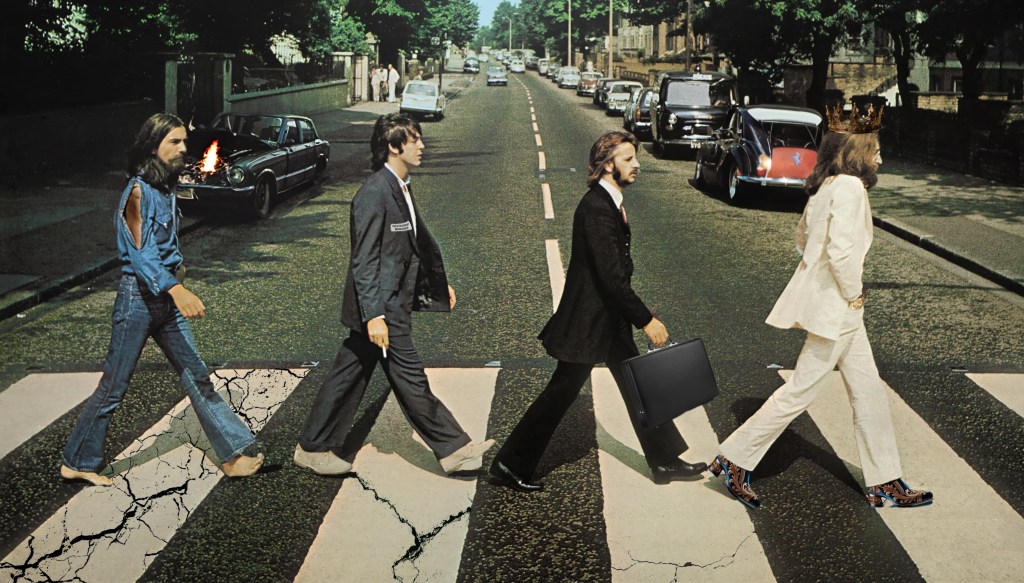
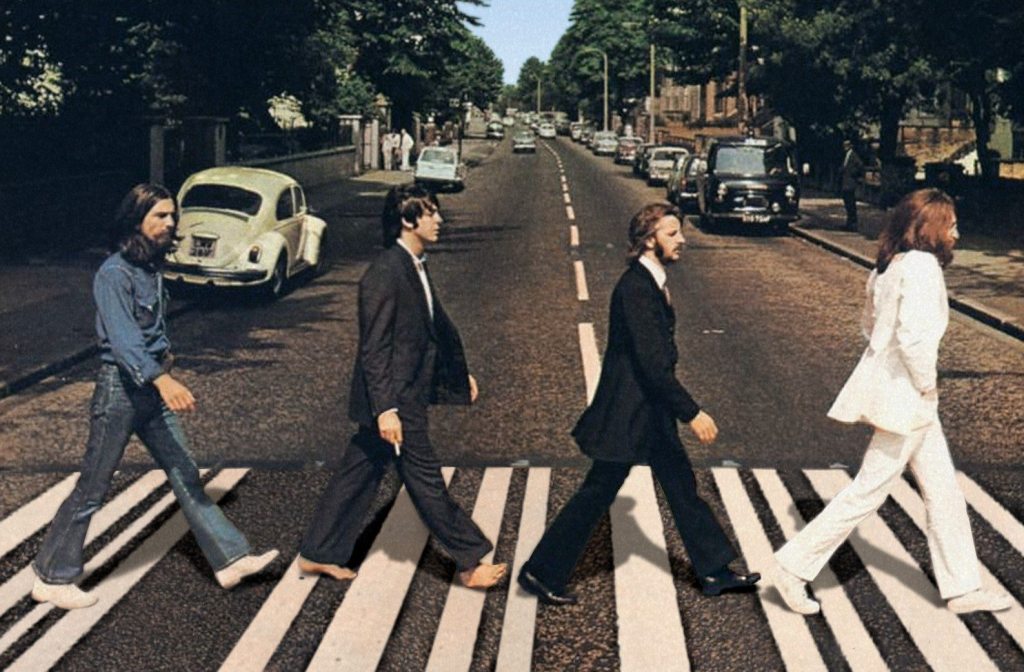
The original Abbey Road image, featuring The Beatles crossing a familiar pedestrian walkway, has long been a symbol of unity and cultural harmony. However, in this reimagined version titled “Crossing Divides: Inequality in Today’s Society,” the image takes on a new meaning that reflects the stark economic and social divides in contemporary society. By replacing The Beatles with figures representing different social classes, the image critiques the disparities that separate individuals based on wealth, privilege, and opportunity. The wealthy elite, symbolized by a figure wearing a crown and luxury shoes, leads the way, representing those who are above the struggles of ordinary society due to extreme wealth. Following him, a business executive carrying a briefcase reflects the corporate class, constantly striving for success and productivity. The middle-class worker, stressed and hurried, with an ill-fitting suit and stressed demeanor, embodying the everyday challenges of the working population. Finally, the impoverished individual in worn-out clothes, next to the burning car and broken road, highlights the harsh reality faced by those left behind in an unequal system.
The manipulated crosswalk and background elements further enhance the image’s message. The crosswalk is unevenly divided, with the wealthy figures walking on a clean, smooth section while the side near the impoverished individual is cracked and decayed, symbolizing unequal access to resources and opportunities. On the wealthy side, luxury cars and a clean walkway represent privilege and concentrated power, while on the impoverished side, burning cars and broken pavement reflect systemic neglect and the struggle through basic living needs. The contrasting environments—clean and luxurious spaces on one side, destroyed and difficult areas on the other—underscore the environmental injustice faced by poorer communities. Together, these elements create a powerful visual narrative that critiques societal structures and calls attention to the urgent need for reform in addressing economic inequality, social mobility, and overall aid and justice.
Tags:

Leave a comment